
How to Bring the Feeling of a Spa Home, Without Redesigning Your House
You walk through the spa doors and something begins to change.
Your voice gets a little quieter.
Your shoulders drop.
Your phone disappears into a locker.
Someone hands you tea.
The lighting is softer. The air smells different. There is nowhere you need to rush for the next little while.
And perhaps the most remarkable part is that very little has happened yet.
You haven’t had the massage.
You haven’t stepped into the sauna.
No one has applied an expensive serum to your face.
And yet, somehow, you already feel different.
We tend to attribute that feeling to the beautiful things around us, the plush robe, the treatment rooms, the candles, the heated loungers.
Those things certainly help.
But the deeper magic of a spa isn’t found in any single object.
It’s in the way a spa changes your relationship with time, attention, your senses and yourself.
And that raises an interesting question.
Instead of asking how to make your home look more like a spa, what if you asked:
What does a spa do differently, and how could I bring a little more of that into my everyday life?
The Spa Feeling Isn’t Something You Can Buy
There is an entire category of products promising to make your bathroom feel like a luxury spa.
Fluffy towels.
Eucalyptus bundles.
Bath trays.
Candles.
Essential oil diffusers.
Beautiful bottles lined neatly along a shelf.
I happen to love many of those things.
Beauty matters. Sensory pleasure matters. Your environment can absolutely influence how you feel.
But you can own the world’s softest robe and still wear it while answering work emails.
You can light a beautiful candle while mentally rewriting tomorrow’s to-do list.
You can fill the bathtub with expensive salts and spend twenty minutes scrolling on your phone.
The products aren’t the problem.
They’re simply not the whole experience.
What makes a spa feel restorative isn’t only what surrounds you.
It’s what the environment invites you to do differently.
And that is something worth bringing home.
Principle One: Create a Threshold
Think about what happens when you arrive at a spa.
There is almost always a transition.
You enter.
You check in.
You put your phone away.
You change clothes.
Perhaps you shower.
You wrap yourself in a robe.
You move from the reception area into quieter spaces.
These small acts separate where you were from where you are now.
At home, those thresholds often disappear.
Work ends, and you’re immediately making dinner.
Dinner ends, and you’re cleaning the kitchen.
The kitchen is clean, and you’re answering one more message.
Then suddenly you’re in bed wondering why your mind hasn’t received the memo that the day is over.
You don’t need a spa locker room to create transition.
You need a small ritual that tells your body and mind:
That part of the day has ended. This part is beginning.
Maybe you change clothes when work ends.
Maybe you wash your face before you start your evening.
Maybe you take a shower and deliberately imagine the day going down the drain.
Maybe you light a candle when the kitchen closes.
The action matters less than the repetition.
A threshold gives you somewhere to cross.
Principle Two: Reduce the Number of Things Competing for Your Attention
Spas are remarkably good at subtraction.
There are usually fewer screens.
Fewer decisions.
Fewer visual distractions.
Fewer notifications.
Fewer people asking you questions.
The environment isn’t demanding that you divide your attention among twelve things at once.
And perhaps that’s part of why you can finally hear yourself think.
At home, we often try to create relaxation by adding something.
A bath.
A face mask.
A meditation app.
A glass of wine.
A new product.
But sometimes the more powerful question is:
What could I remove?
Put the phone in another room.
Turn off the television.
Clear one surface.
Lower the lights.
Don’t listen to a podcast while you’re soaking.
Let one experience be enough.
Restoration doesn’t always require another wellness practice.
Sometimes it requires fewer competing inputs.
Principle Three: Engage the Senses Intentionally
Spas understand something that everyday life often forgets:
Your senses are part of your experience.
Notice how carefully good spas use them.
Lighting isn’t simply functional.
Music isn’t accidental.
Textures matter.
Temperature matters.
Scent matters.
The weight of a robe matters.
The warmth of tea in your hands matters.
None of these things alone creates transformation.
Together, they communicate something:
You are somewhere different now. Pay attention.
You can use the same principle at home without turning every room into a treatment suite.
Ask what your senses are receiving.
Is the overhead lighting harsh when you’re trying to wind down?
Is the television always running in the background?
Does your bedroom feel visually busy?
Would fresh sheets change how tonight feels?
Would opening the window for five minutes change the air?
Would drinking your tea from the beautiful cup instead of the chipped mug change the experience?
Sensory intention isn’t about perfection.
It’s about noticing.
Principle Four: Ritual Turns Ordinary Acts Into Markers
At a spa, very ordinary things can suddenly feel meaningful.
Drinking tea.
Washing your face.
Sitting quietly.
Taking a shower.
Walking.
Breathing.
These aren’t rare activities.
What changes is the attention surrounding them.
That is the power of ritual.
A ritual doesn’t need to be spiritual, elaborate or time-consuming. It can simply be an ordinary action performed intentionally enough that it begins to mark a transition or create meaning.
Your evening skincare routine can be something you race through while thinking about tomorrow.
Or it can become the five minutes when you stop doing things for everyone else and return your attention to yourself.
Same cleanser.
Same bathroom.
Completely different experience.
This may be one of the most useful things spas can teach us:
You don’t always need a new activity. Sometimes you need a new relationship with an activity you already do.
Principle Five: Protect the Edges
Imagine finishing a beautiful massage.
You lie there for a moment.
The therapist leaves quietly.
You get dressed slowly.
You step into the relaxation room.
Someone offers you water or tea.
You sit.
No one expects you to immediately become productive.
Now imagine the same massage ending with someone saying:
“Great. Your laptop is open in the next room, there are fourteen emails waiting and dinner needs to be made in twelve minutes.”
The massage didn’t change.
The edge around it did.
This happens constantly at home.
We create a lovely moment and then sandwich it tightly between obligations.
We meditate and immediately check email.
We take a bath and then clean the bathroom.
We sit outside with coffee while simultaneously reviewing the day’s calendar.
One way to bring spa principles home is simply to protect a little space before and after restorative moments.
If you take a bath, give yourself ten quiet minutes afterward.
If you meditate in the morning, don’t pick up your phone the second you open your eyes.
If you make tea, sit down while you drink it.
Let the experience have an edge.
Sometimes restoration needs somewhere to land.
Principle Six: Let Yourself Receive
This may be one of the hardest spa principles to recreate at home.
At a spa, you are allowed to receive.
Someone prepares the room.
Someone warms the towels.
Someone makes the tea.
Someone asks what pressure you prefer.
Someone tells you where to go next.
For a little while, you aren’t coordinating everything.
That can feel almost startling if you’re accustomed to being the person who anticipates everyone else’s needs.
At home, you may not have someone waiting to place cucumber water beside your chaise lounge.
But you can still practice receiving.
You can prepare something for your future self.
Put fresh pajamas on the bed before your bath.
Make tomorrow’s breakfast tonight.
Ask someone else in the household to handle dinner.
Order the meal.
Accept help without immediately reciprocating.
Let something be easy.
Receiving isn’t laziness.
It is a different posture from constant output.
And sometimes that shift is precisely what makes a spa experience feel so restorative.
Principle Seven: Give Yourself Permission to Do Nothing Useful
This may be the most radical thing spas offer.
You are allowed to sit there.
That’s it.
You can sit beside a pool.
Lie on a heated lounger.
Watch steam rise.
Look through a window.
Drink tea.
Take a nap.
And no one comes over and asks what you’ve accomplished.
At home, inactivity can feel strangely uncomfortable.
If we’re sitting, we reach for the phone.
If we’re watching television, we fold laundry.
If we’re having coffee, we check email.
We pair rest with productivity as though rest needs to justify its existence.
Spa time gives us permission to experience something without turning it into an accomplishment.
That principle costs nothing to bring home.
It may also be one of the hardest.
You Don’t Need to Recreate the Spa
There is an important distinction here.
Your home does not need to become a spa.
Home has other jobs.
It holds dirty dishes and school bags and dog toys and bills and people you love.
It is where real life happens.
Trying to make every room serene may simply create another standard you’re failing to meet.
The goal isn’t to live permanently inside a relaxation lounge.
The goal is to notice what spas teach us about creating restorative moments and borrow what works.
Perhaps you need a clearer transition at the end of your workday.
Perhaps your evenings need less stimulation.
Perhaps you want one beautiful sensory ritual.
Perhaps you need to stop multitasking your rest.
Perhaps you need to practice receiving.
Choose one.
You don’t need seven new rituals beginning Monday morning.
The spa itself teaches us something gentler than that.
Slow down.
Notice.
Choose intentionally.
Begin there.
Bringing the Spa Home Is Really About Bringing Yourself Home
There will always be something special about going to a spa.
Part of its power comes precisely from stepping outside ordinary life.
You cannot, and perhaps should not, recreate all of that at home.
But you can notice what happens to you when you enter those spaces.
You move more slowly.
You pay attention to your senses.
You stop responding to every demand.
You allow someone, or something, to care for you.
You experience moments without trying to make them productive.
And perhaps that is the real lesson.
The spa feeling isn’t only about where you are.
It is partly about how you are allowed to be while you’re there.
The invitation is not to turn your bathroom into a luxury spa.
It is to bring a little more of that way of being into the life waiting outside the spa doors.
Reflection / Journal Prompt
Think about the last spa experience that left you feeling genuinely restored. What was different about the way you moved, felt or experienced time while you were there?
Which one piece of that experience could you bring into your ordinary life—not someday, but this week?
Choose Your Next Step
Discover the kind of restoration that speaks to you.
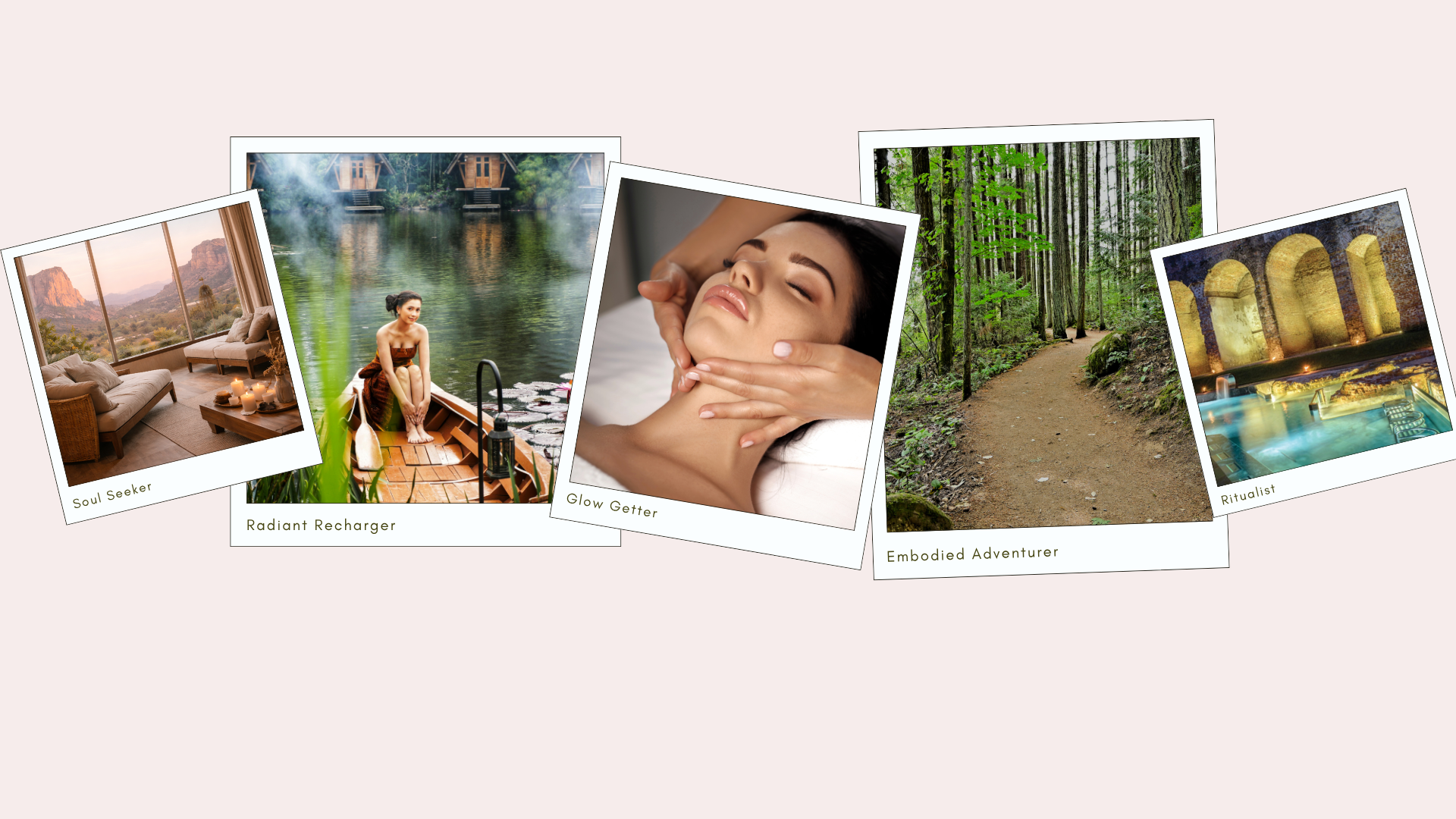
Take the Love to Spa Transformation Archetype Quiz and begin exploring the rituals, environments and spa experiences that align with what you may be craving right now.
Because creating more restoration in your life doesn’t always begin with going somewhere.
Sometimes it begins with noticing what helps you come back to yourself.
Use the Love to Spa DIY Spa Day Checklist to create an intentional day of restoration at home—from setting the atmosphere and choosing your treatments to making space for the quiet moments in between.
You don’t need to recreate a luxury spa. You simply need to create the conditions that help you slow down, receive and reconnect with yourself.